




Roasted vs Raw Dry Fruits: How Processing Affects Nutrition, Taste, and Shelf Life
When it comes to healthy munching, dry fruits and nuts are among the most popular snack options worldwide. From almonds and cashews to pistachios and makhana, they are packed with protein, healthy fats, fiber, vitamins, and antioxidants. Their ease of storage, portability, and versatility have made them a staple in many households. The growing awareness of fitness and healthy eating has also raised a common question: Are roasted nuts less healthy than raw? Many customers want to know if roasting affects the nutritional value of the nuts.
In this blog, we are going to dive deeper to understand whether roasting nuts destroys nutrients and which dry fruits are best for daily consumption, so that you have a clear idea of which option might work best for you.
What Are Raw Dry Fruits?
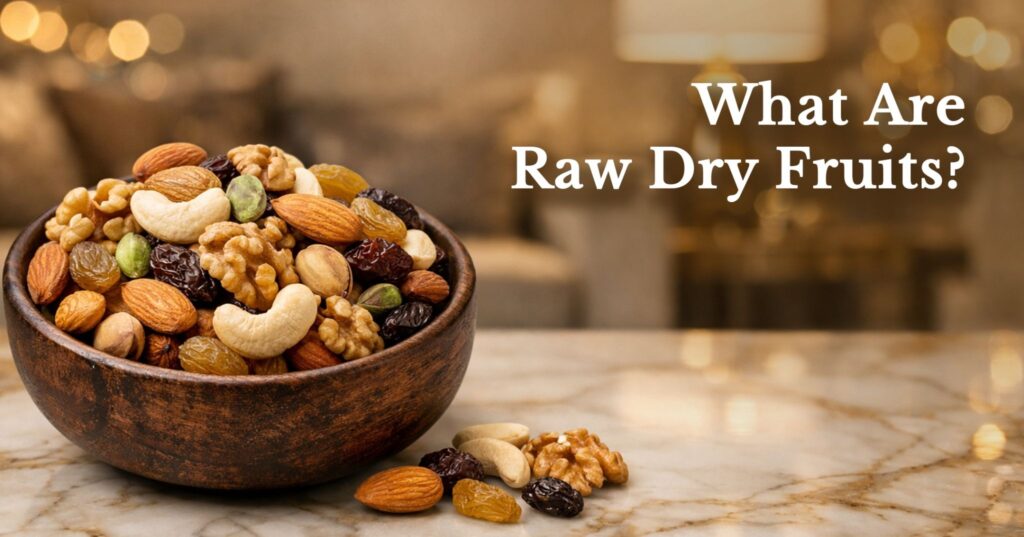
Raw dry fruits are nuts and seeds that have not been heat-processed. They may be cleaned and dried, but they are not roasted, salted, or flavoured. There are many benefits of raw nuts, and these are usually preferred by people who avoid processed foods or follow clean-eating habits.
What Happens During Roasting?

Roasting is a heat treatment used to enhance the flavour and texture of nuts. Heat makes the natural sugars and fats in the nuts react, creating a deeper, richer flavour. Roasting nuts benefits consumers by reducing moisture, making them crunchier and, at times, increasing their shelf life. There are two main types:
Dry roasting – In this process, nuts are roasted without oil.
Oil roasting: Nuts are roasted in oil, often followed by salt or seasoning.
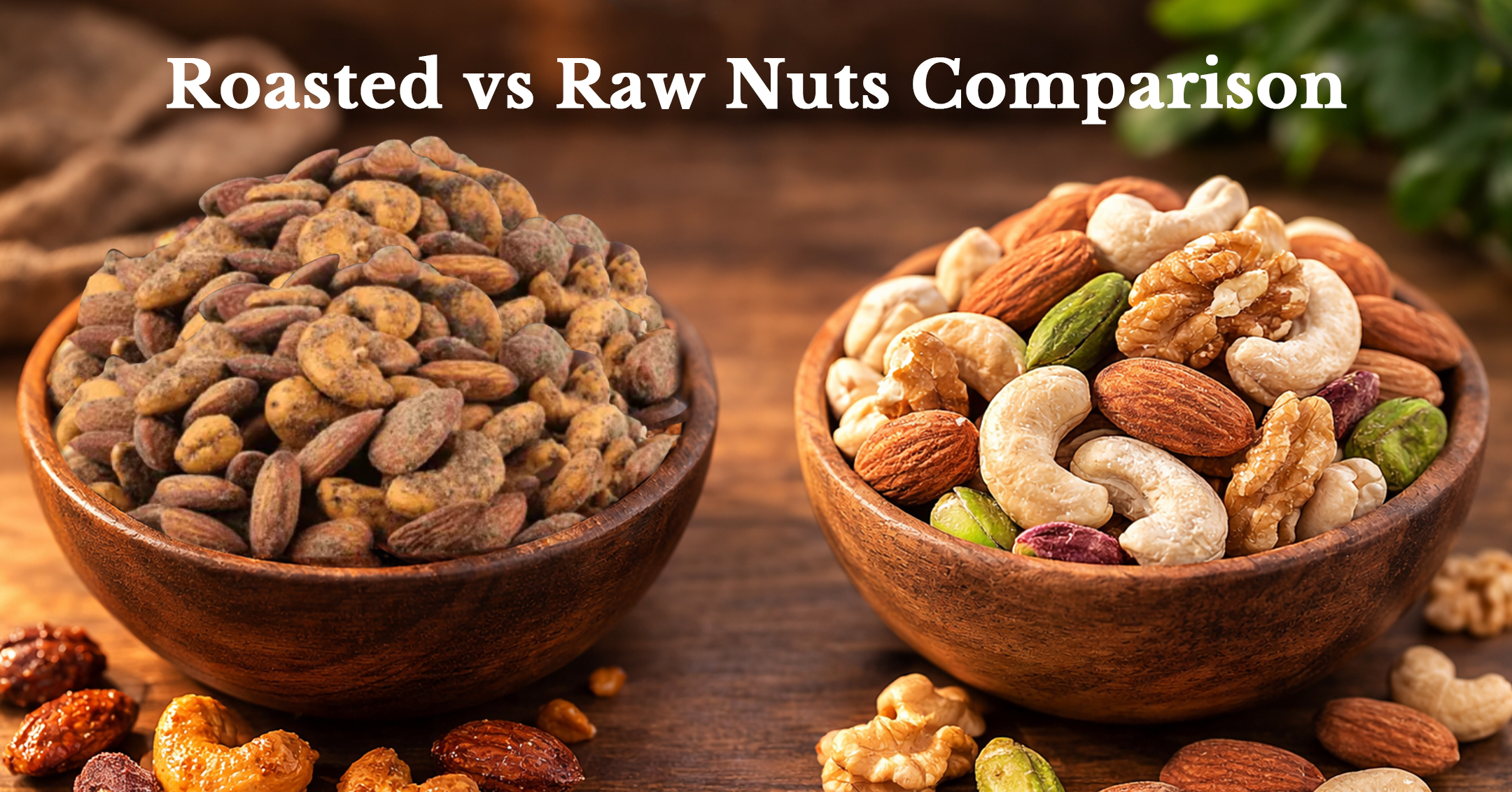
Roasted vs Raw Nuts Comparison
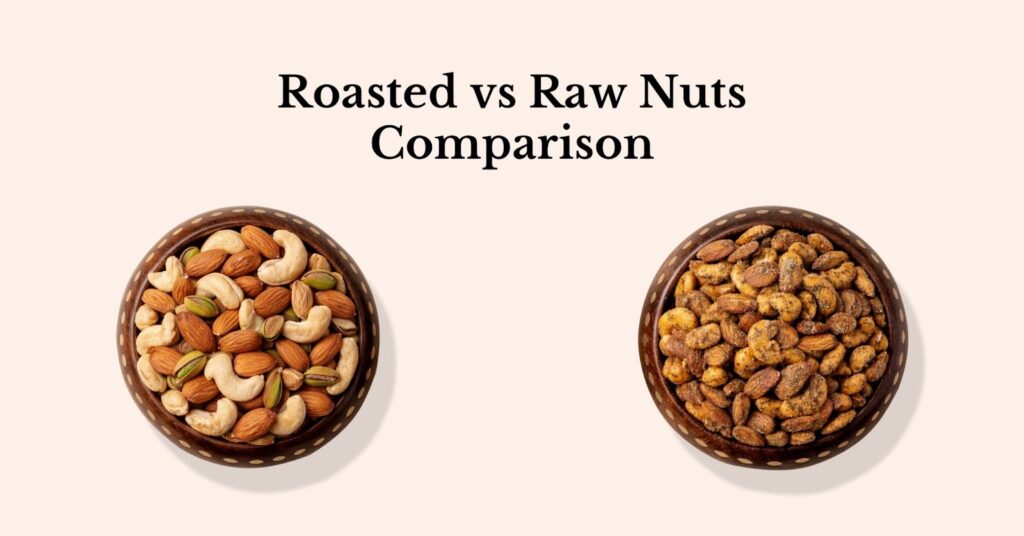
Heat can slightly change the nutritional profile of the nuts. Below is a comparison of the nutritional values of roasted vs. raw dry fruits.
Calories and Macronutrients
There is about the same amount of calories, fat, and protein in both raw and roasted nuts. Roasting does not necessarily change macronutrients unless oil is used. Oil-roasted nuts may contain more calories, fat, and added sodium, while dry-roasted nuts have nutrient profiles similar to raw nuts.
Vitamin and Antioxidant Levels
This is where the difference between raw and roasted appears. Roasting can slightly reduce some heat-sensitive nutrients and certain antioxidants. But in many cases, roasting can also increase the amount of certain antioxidants by breaking down cell walls. However, a controlled roasting process makes the loss small.
Healthy Fats Stability
Nutrients are rich in healthy unsaturated fats, and excessive heat can reduce their levels by oxidising them. Which is why light roasting is better than heavy roasting. Premium roasted nut packs often use controlled temperature heating to preserve more nutrients and balance taste and health.
Taste and Texture
Taste is one of the biggest reasons people choose roasted dry fruits. Roasting enhances natural sweetness, improves crunch, reduces bitterness, and adds a smoky flavour. Salted roasted nuts are especially popular as they deliver a savoury experience. Raw nuts are for people who enjoy a soft, earthy, and natural flavour.
Digestibility
Raw nuts contain natural compounds that can cause slight digestive discomfort in sensitive individuals and reduce mineral absorption. Roasting, on the other hand, improves digestibility for some people by reducing these compounds and making nuts easier to digest. Soaking raw nuts before eating also helps.
Shelf Life
Shelf life is another important basis of comparison. Raw nuts contain natural oils and moisture, which can reduce their shelf life if not stored properly in airtight containers or a refrigerator. Whereas roasting removes moisture from the nuts and extends their shelf life, improper storage can also reduce shelf life.
Better for Weight Loss
Both raw and roasted nuts can support weight management when consumed in moderation. Nuts are a rich source of protein and dietary fibre, which help reduce cravings and keep you full for longer. The key factor for consideration is their portion size, not whether they are roasted or raw.
How to Choose the Best Option for You
If you want to choose between raw and roasted nuts, the best dry fruit for health, the list below explains why you should prefer the former or the latter.
Choose Raw If:
You prefer minimally processed foods
You want slightly higher natural nutrient retention
You plan to soak them before consumption
Choose Roasted If:
You prioritize taste and crunch
You want better digestibility
You prefer ready-to-eat convenience
You want longer shelf stability
Final Thoughts: Quality Matters More Than Processing

So, which one wins the comparison? The answer is that both raw and roasted nuts are healthier when consumed in controlled portions. Raw nuts may offer a slightly higher nutritional value, whereas roasted nuts offer superior flavour and better digestibility. Beyond processing, the quality of nuts, whether raw or roasted, can quickly lose nutritional value if handled poorly.
Buy roasted dry fruits online from The Premium Basket for high-quality nuts and a supreme snacking experience.